Ultrasonic levitator — STEM club phase one
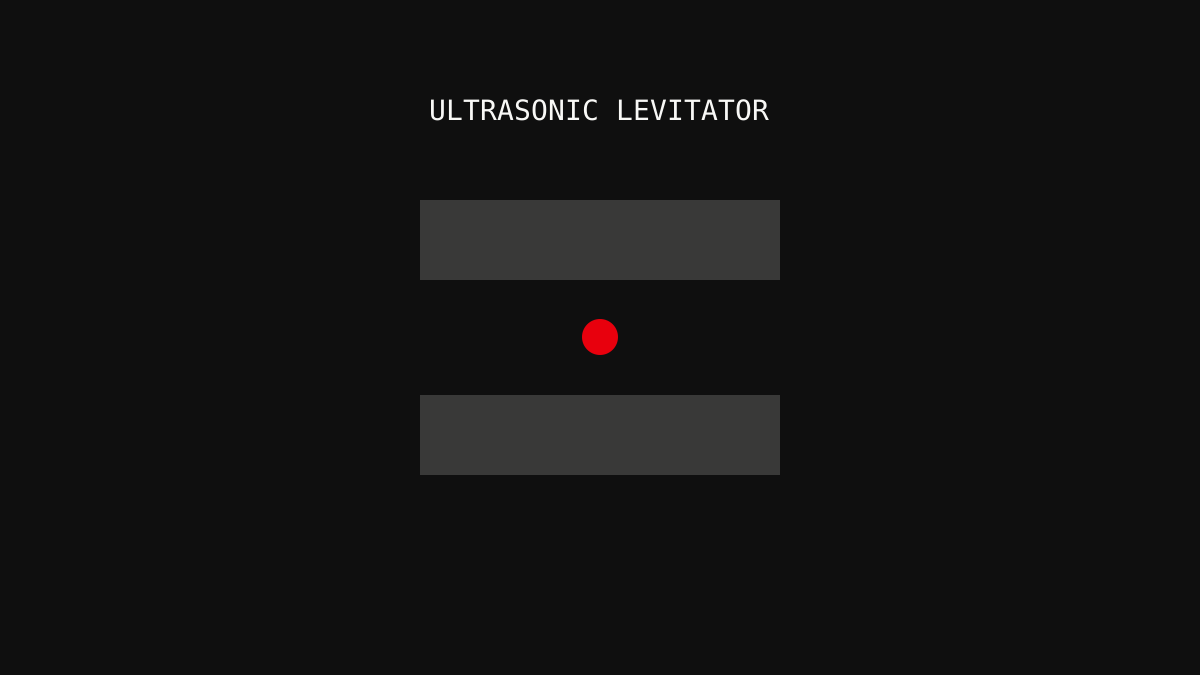
A levitator uses two arrays of ultrasonic transducers facing each other. When they’re driven at the same frequency and phase, they create standing waves. Small objects sit in the pressure nodes — the quiet spots between the waves.
We’re targeting 40 kHz because the transducers are cheap and the wavelength is small enough to lift light foam pieces, not just dust.
Phase one checklist:
- Wire the driver board without reversing polarity on the transducers (done, after one pop).
- Measure actual resonant frequency with the function generator — spec says 40 kHz, reality says 39.6 kHz on our batch.
- Confirm node spacing matches λ/2. Math said 8.6 mm. Measured 8.4 mm. Close enough for now.
- Levitate a polystyrene bead bigger than 2 mm (not yet — bead keeps getting spat out when power climbs).
The tricky part is phase alignment. If the top array is half a wavelength off, you get cancellation instead of a node. We marked the positive terminals with red nail polish so we stop guessing.
STEM club meets Thursdays. Mr Patel says if we get stable levitation by week eight we can try a tiny droplet. I want week six.
Still in progress. Updates when the bead stays up for more than three seconds.
Comments
Comments are scaffolded but not active yet. The Webmaster will flip the switch before go-live.